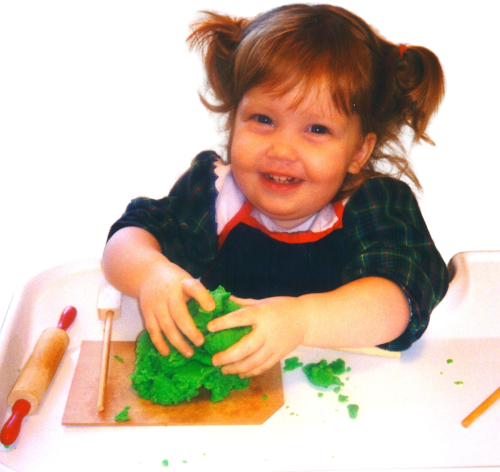
Playdough—equal parts art supply, sensory tool, and childhood “snack”. But let’s be honest: playdough is never going to earn a Michelin star—unless there’s a category for “World’s Saltiest Mistake.”
Kids everywhere sneak a bite (and instantly regret it), but that’s part of the playdough legend. The real magic, though, isn’t in its taste—it’s in what it teaches. Playdough builds fine motor skills, sparks imagination, and fosters social growth in children.
And adults? We get the benefits too. Kneading, squishing, and rolling dough can be surprisingly therapeutic, easing stress and offering a screen-free reset.
Whether it’s in a classroom, a therapy office, or a kitchen table, a lump of dough reminds us that learning doesn’t have to be complicated to be meaningful. Playdough may never win a James Beard Award, but its real value lies in the way it nourishes minds, friendships, and creativity. So the next time your child sneaks a bite, take comfort: it may not be good for their stomach, but it’s definitely feeding their growth. Zero stars for taste, five stars for life skills.
Read on and discover why playdough is more than a toy!
Fine Motor Skills
For kids, playdough is a finger gym: rolling snakes, cutting shapes, and pinching lumps strengthen small hand muscles, improves dexterity, and prepares little fingers for handwriting, buttoning clothes, playing an instrument, and (eventually) using real kitchen tools that actually produce edible food. It’s exercise disguised as fun.
For adults, those same motions double as stress relief—think of it as yoga for your hands (without the awkward poses).
Creativity & Imagination
There are no rules with playdough—only possibilities. A lump of dough becomes a pizza, a dinosaur, or a cupcake bakery with zero calories. And sure, sometimes the “cake” ends up in their mouth, but that’s just research and development, right? This open-ended play sparks creativity, fuels storytelling, and builds confidence as children bring their ideas to life. And creativity fosters problem-solving skills.
Adults, meanwhile, rediscover the joy of unstructured creativity—making silly shapes, goofy animals, or just smashing colors together because it feels good.
Social and Emotional Growth
Gather a group of kids around playdough, and suddenly you’ve got a mini cooking competition: sharing rolling pins, negotiating who gets the red, and proudly presenting creations that almost look like cookies. It’s teamwork with a side of drama—and a big helping of emotional growth. Playdough can also be calming: the repetitive kneading and shaping has a soothing effect, helping kids manage big emotions and stress. And when the world feels overwhelming, there’s something calming about squishing dough (no chewing required).
Adults aren’t off the hook—we can use it to unwind with kids, model cooperation, or even just have a laugh making “cookies” no one can eat. Bonus: the repetitive squish-squash motion is downright calming, no matter your age.
Language & Storytelling
Kids don’t just make with playdough—they narrate. “This is my burger shop. This one is a pickle. You can eat it, but don’t!” (Spoiler: someone will eat it anyway.) These conversations enrich vocabulary and encourage storytelling—whether they’re describing a new invention or warning you not to taste the purple “meatball.”
For adults, playdough sparks connection: asking questions, weaving stories, or even joining in the silliness. (Yes, you’re allowed to make a lopsided dinosaur and name it Kevin.)
Problem-Solving & Cognitive Skills
Playdough challenges kids to think critically: How can I make this snake longer? How do I keep the tower from toppling? What happens if I mix colors? These little experiments nurture problem-solving, planning, and flexible thinking—all foundational skills for learning.
Adults, meanwhile, get a free creativity workshop—approaching problems from playful angles, brainstorming solutions, and remembering that not every tower has to stand to be a success.
Leave a Reply